


Westcliff Surf Wins First NSSA National Championship in Program History
A Moment Years in the Making
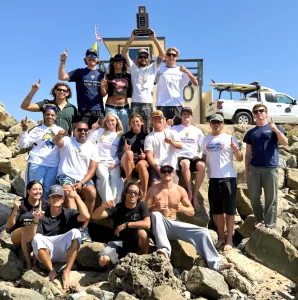 Years of hard work, commitment, growth, vision, and support culminated in one historic moment.
Westcliff Surf did it.
The Warriors captured their first NSSA National Championship, defeating nine-time national champions Point Loma Nazarene University, 153-139, and etching their names into collegiate surfing history.
On the beach at Salt Creek in Dana Point, California, it felt less like a surf contest and more like a stadium. Something out of Hollywood. The kind of atmosphere where every wave, every score, and every cheer seemed to echo beyond the shoreline.
The championship came at a time when Southern California was experiencing one of the most significant swells in decades, drawing surfers from around the world to the same stretch of coast. The ocean itself seemed to match the magnitude of what was unfolding on shore.
Westcliff entered the weekend with a wave of support behind them. Friends, family, Westcliff Athletics, and university leadership lined the beach, including Westcliff President and CEO Dr. Anthony Lee, who made the trip to Salt Creek on Sunday to witness the final day of competition and stand alongside the Warriors as history unfolded.
The team did not arrive hoping for a moment. They arrived ready for one.
Building Something That Changed Collegiate Surfing
What started as an unprecedented idea has become a defining shift in collegiate surfing.
Westcliff University was the first institution in the nation to offer true athletic scholarships for surfing, treating the sport with the same seriousness and structure as traditional varsity programs. What was once considered a club-level pursuit became something fully supported, fully funded, and fully invested in.
That decision reshaped everything.
Surfing at Westcliff is not an afterthought. It is a program with coaching, travel support, athletic training, academic flexibility, and institutional backing designed for athletes pursuing both education and elite competition at the same time. Over time, that vision stopped being theoretical. It became real. Now, it stands as a national championship program.
Westcliff University stands at the top of collegiate surfing, not in a symbolic or regional sense, but across the entire landscape of the sport, alongside traditional powerhouse programs such as USC, Stanford, UCLA, and others.
The model works. And it works at the highest level. This innovative approach even caught the attention of major media outlets including Fox Sports LA, who visited the team earlier this year for an in depth interview.
An Underdog Story That Was Never Just on Paper
This was not an overnight rise. It was built year after year. 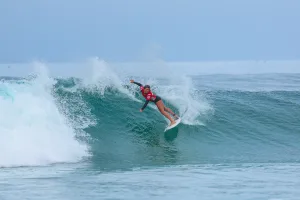
Westcliff steadily climbed through the national ranks, finishing fifth, then third, then second, then second again. Each season closed the gap. Each season narrowed the distance between the Warriors and the standard established by Point Loma Nazarene University, the nine-time national champions and longtime powerhouse of collegiate surfing.
On paper, Westcliff was the underdog. But on the beach, the story was already changing.
As Dr. Lee reflected on the championship, the emotion of the moment stood out just as much as the result.
“I feel incredibly fortunate to have witnessed it in person,” said Dr. Anthony Lee, President and CEO of Westcliff University. “What I’ll remember most wasn’t just the championship itself, it was the emotion of the moment. Watching our student-athletes, coaches, families, and supporters collectively hold their breath and then erupt in celebration captured everything that makes collegiate athletics special. This national championship is a testament to the dedication, perseverance, and excellence of our surf team and coaching staff, and all of Westcliff is incredibly proud of what they accomplished.”
A Season Defined by Breakthroughs and Momentum
The 2026 season carried a different energy from the beginning. It was not just competitive. It was building toward something.
Early in the year, co-captains Jordy Collins and Taylor Stacy set the tone with key event victories that established confidence and momentum. Each result felt like another layer added to a foundation that was already growing stronger. Then came the moments that gave the season its emotional shape.
Blaze Roche captured his first NSSA victory at Huntington Beach, his home break, in a performance that carried personal meaning as he surfed in honor of his late friend, fellow Huntington Beach surfer Kolby Aipa. It was a reminder that for this team, competition and humanity often moved together.
At the same time, Westcliff continued strengthening its roster with major additions. Encinitas standout and USA Junior National Team surfer Titus Kaimana Santucci arrived as one of the most highly touted recruits in collegiate surfing. Already competing in the World Surf League Qualifying Series, he brought an immediate presence to the lineup.
Midseason additions Jackson Taylor and Jacob Hardy also made an instant impact.
Taylor, in particular, delivered one of the defining moments of the championship with a perfect 10-point ride featuring a massive 360 air. He went on to finish third in the nation during his first collegiate season, while Santucci finished runner-up as a freshman.
Together, they formed a roster that was not only deep, but built for pressure.
Lucas Taub and a Full-Circle Championship Moment
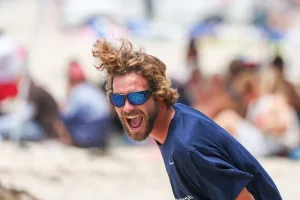 At the center of it all is Head Coach Lucas Taub.
A former Westcliff scholarship athlete, Taub once competed for the very program he now leads. He graduated as valedictorian with a 4.0 GPA while earning his Bachelor of Business Administration (BBA), balancing academics and competition at the highest level.
Now in his second year as head coach, he has guided Westcliff to its first national championship in program history.
But Lucas’ role in this story is not just technical. It is deeply personal.
He is also a professional surfer competing on the World Surf League Qualifying Series and runs his own surf coaching business, working with athletes across multiple levels of development. His coaching style reflects both sides of that experience: high-performance precision paired with a grounded understanding of growth, pressure, and patience.
Earlier this year, Lucas found himself in a very different spotlight.
In March, while coaching a junior contest in Oceanside, he witnessed a father and young daughter get pulled into a dangerous rip current. Without hesitation, still fully clothed, he ran across the jetty, entered the water, and rescued both of them.
The moment was captured on video and quickly spread across national media, appearing on Good Morning America, CNN, Fox News, and more. It even drew recognition from Oscar, Emmy, Tony and Grammy award winner Viola Davis, who publicly praised his actions.
Lucas did not lean into the attention. He redirected it.
He spoke about ocean safety, responsibility, and the importance of showing up for others when it matters most. That message became just as defining as the act itself. The City of Oceanside later honored him with formal recognition and a day named in his honor, a moment that, like his coaching, came down to instinct, leadership, and care.
Preparation, Detail, and the Westcliff Identity
What separated Westcliff this season was not just talent. It was preparation.
In the week and a half leading into nationals, the team completed 11 practices at Salt Creek, the same location where they would eventually compete for a national title. Each session was filmed, reviewed, and broken down in detail.
“It was more than just practice. It was about getting the team together and creating chemistry before the weekend,” said Coach Taub.
Lucas’ coaching approach is rooted in precision. Every wave is studied. Every heat is analyzed. Every decision is discussed. In a sport where scoring depends on judges and conditions can shift instantly, preparation becomes everything.
Surfing is not like traditional sports. It is unpredictable, judged, and constantly changing. Athletes are scored on their best two waves, with execution, difficulty, and timing all under constant evaluation while competing in an uncontrollable ocean.
At Westcliff, that unpredictability is not feared. It is prepared for.
Championship Weekend at Salt Creek
By the time Friday arrived, the work had already been done. Now it was about execution. 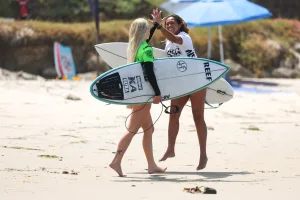
Westcliff’s presence on the beach was impossible to ignore. Three team tents lined the sand. Supporters filled the shoreline. Every wave ridden by a Warrior drew a reaction from the crowd. The energy was consistent and unmistakably Westcliff’s.
Athletes like five-time national champion Taylor Stacy, who added another title this season, and co-captain Jordy Collins, a former national champion and one of the foundational leaders of the team, helped set the tone throughout the weekend. Lucas often describes Collins as the anchor of the program, the athlete he trusts most in pressure situations. “Jordy is the one you want up to bat when the bases are loaded,” Taub said.
That trust showed in one of the most important heats of the tournament. During a crowded Round 3 heat, conditions suddenly went flat after a weekend of ideal surf. With waves becoming scarce and elimination approaching, Collins found himself in a position where timing and wave selection would decide everything. From the beach, Lucas signaled a strategic adjustment based on his read of the break. Moments later, Collins caught two crucial waves and finished the heat in first place. The turning point directly contributed to the team’s overall score.
Taylor continued her dominant run through the bracket, while freshmen AnnaBella Lopez and Niyah Rosen delivered key points throughout the event. Rosen’s performance carried particular significance given her return from a knee injury earlier in the season, a comeback supported by Westcliff Athletics trainers and staff that culminated in a strong quarterfinal finish.
Every point mattered. Every athlete contributed. Longboarders Kylan Crapenhoft and Jacob Hardy also added important depth, reinforcing the full-team structure that defined Westcliff’s success. By the end of the first day, Westcliff held a nine-point lead over Point Loma, a small margin, but a meaningful one against the reigning champions.
Sunday was finals day. The marine layer burned off. The sun came through. The surf continued to deliver. Everything came down to the final heats. Freshman standouts Titus Santucci and Jackson Taylor advanced into the final rounds alongside Taylor Stacy in the women’s final. Every wave carried weight. Then the scores became official.
Westcliff had won the national championship.
The beach erupted. Athletes ran into the water. Coaches followed. Families poured forward. A cooler was dumped over Lucas in the surf. For a moment, everything blurred into celebration, emotion, and disbelief. Years of work finally released at once.
A Program Built by Everyone Who Laid the Foundation
Assistant coach and former Westcliff scholarship surfer Robbie Christ reflected on what the moment represented for the program’s long arc.
“Winning a national championship means everything to me,” Christ said. “I had the opportunity to be the first scholarship surfer in the history of the program, and now to be standing here as an assistant coach watching this team become national champions is something I never could have imagined when we started. What makes this championship so special is that it wasn’t an overnight success. Every team, every athlete, and every coach helped lay the foundation for this moment.”
Westcliff Surf’s first national championship represents more than a title. It represents a shift in what collegiate surfing can be. From pioneering surf scholarships to building a fully supported varsity-level program and earning national media attention, Westcliff has redefined the space it operates in.
Lucas knelt in the sand and let the weight of the emotions. He reflected, saying, “I put my everything into this team and to see it all come together is one of the most rewarding feelings in the world. I feel so lucky everyday to be in this position. I’m working with amazing people and doing what I love. I can’t wait for next season.”
And now, standing at the top of the NSSA, the Warriors are no longer the program trying to catch up. They are the program others are trying to catch.
