



Hands-On Nursing Training That Prepares You for Clinical Practice
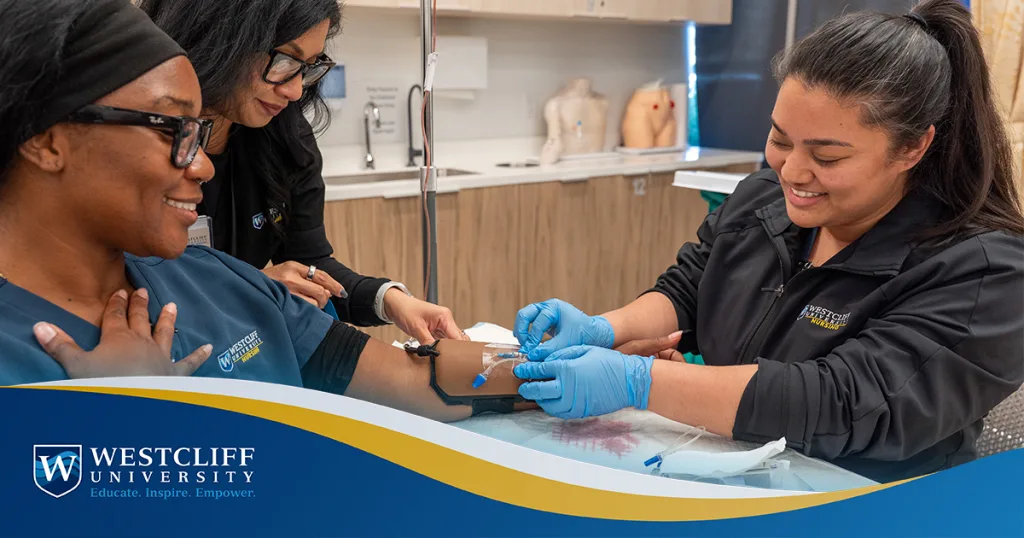
Prospective nursing students often ask a fair question before they commit to a program: Will this degree actually prepare me for real-world patient care? That question matters, because strong academics alone are not enough. Hands-on nursing education should give students repeated opportunities to apply what they are learning in realistic settings, not just read about it in a textbook. At Westcliff University, hands-on nursing training is built into the learning experience from the start through simulation, guided practice, faculty support and clinical experience designed to help students step into nursing with greater confidence.
In nursing education, hands-on training means learning by doing. It includes practicing clinical procedures, working through patient scenarios, using simulation tools, receiving structured feedback and developing judgment in environments that reflect the pace and demands of healthcare. Understanding the role of practical training before choosing a nursing school can help students avoid programs that feel too distant from the realities of clinical care.
Why Hands-On Training is Important for Nursing Students
Hands-on training helps students build the core competencies they need in clinical settings. That includes patient care skills, clinical judgment, critical thinking, communication and the ability to respond calmly under pressure. When students practice these skills repeatedly in supported environments, they are better prepared to carry them into clinical rotations and, eventually, professional nursing roles. Westcliff describes its nursing programs as emphasizing immersive simulations, clinical experience and faculty guidance to help students build confidence and readiness for practice.
When hands-on training is limited, students often feel the effects quickly. Common challenges can include:
- lower confidence when performing skills for the first time
- more difficulty transitioning into clinical rotations
- slower development of clinical judgment
- more hesitation in patient care situations
- a less comfortable shift from classroom learning to real healthcare environments
That gap is exactly why students should pay close attention to whether a program emphasizes practice, feedback and repetition. A nursing program can sound strong on paper, but without meaningful nursing skills training, it may not prepare students as fully for the demands of clinical care.
A New Standard for Career-Ready Nursing Education
Westcliff University’s College of Nursing is redefining how future nurses learn by delivering hands-on, clinically immersive training from day one. Through high-fidelity simulation labs, faculty mentorship, and programs designed with a focus on career readiness, students in both the Bachelor of Science in Nursing (BSN) and Entry-Level Master of Science in Nursing (ELM) programs gain the real-world skills they need to enter healthcare with confidence.
What Students Can Expect From Hands-On Nursing Training at Westcliff University
For students exploring a nursing program with hands-on training, Westcliff’s approach is designed to make practice part of the rhythm of learning, not an occasional add-on. Students in the BSN and ELM pathways experience faculty-led instruction, guided skills development, simulation-based learning and structured opportunities to strengthen performance over time. That mix helps students build confidence while also sharpening clinical judgment and decision-making.
Westcliff’s model includes simulation labs, open skills labs, early clinical preparation and a campus environment designed specifically for nursing students at the Corona campus. The university describes the campus as a nursing-focused environment with state-of-the-art simulation labs, dedicated study spaces and support built around students preparing for healthcare careers.
Learning by Doing: Simulation Labs That Feel Like Real Healthcare
At Westcliff, students don’t wait until the end of their program to practice clinical skills. They begin the moment they start. Westcliff’s simulation environment includes:
- high-fidelity manikins that mimic real physiological responses
- hospital-grade monitoring equipment
- scenario-based simulations that develop critical thinking and clinical judgment
- guided faculty debriefs that reinforce evidence-based practice
This kind of hands-on learning nursing students need can make a major difference. Practicing in realistic environments gives students a safer place to learn, make mistakes, improve technique and strengthen decision-making before entering live clinical settings.
Weekly Open Skills Labs That Build Confidence Through Repetition
Westcliff also offers faculty-led open lab time, giving students added space to refine key nursing skills such as IV insertion, head-to-toe assessments, medication administration and prioritization. These sessions provide individualized support and more opportunities for repetition, which is one reason they matter so much in hands-on nursing training.
Students who start out unsure can progress quickly with that kind of consistent practice. As College of Nursing faculty member Melissa De Vera, MSN, RN, PHN, said, “They come in shy and uncertain. By week seven, they’re scoring in the 90s.
Meet the Educator Connecting Practice and Purpose: Melissa De Vera
Melissa De Vera serves as lead faculty for the Entry-Level Master of Science in Nursing program at Westcliff. She brings both nursing education and informatics experience to the role, and her work includes guiding curriculum, mentoring faculty and supporting a student-centered learning environment for future nurses.
Check out De Vera’s feature article to understand how her presence helps connect technical preparation with purpose. Her perspective reinforces that strong nursing skills training is not only about getting procedures right. It is also about helping students grow into capable, thoughtful professionals who can bring confidence and compassion into patient care.
Two Accredited Pathways: One Purpose
Westcliff’s College of Nursing offers two distinct routes for aspiring nurses:
Bachelor of Science in Nursing (BSN)
Ideal for students beginning their nursing journey and looking to build a strong clinical and academic foundation. Students interested in the BSN can also review how to prepare for the TEAS exam as they get ready for the admissions process. Westcliff’s TEAS guidance notes that the exam is part of the admissions path for both BSN and ELM applicants.
Entry-Level Master of Science in Nursing (ELM)
Designed for learners who already hold a bachelor’s degree in another field and want to transition into nursing more quickly. Westcliff says the ELM program is built for career changers and second-degree students, takes 20 months full time and includes clinical experience beginning in the first semester.
Both pathways include:
- small class sizes
- faculty mentorship
- clinical rotations across the Inland Empire
- state-of-the-art labs
- support with financial aid for those who qualify
Benefits of a Nursing Program With Hands-On Training
A strong nursing program with hands-on training can give students benefits that carry directly into clinical practice.
Increased clinical confidence
Repeated practice helps students feel more prepared when they enter patient-care environments.
Stronger readiness for patient care
Students who train with simulations, guided labs and realistic scenarios are often better equipped to respond when care becomes fast-paced or unpredictable.
Smoother transitions into clinical rotations
Early exposure to skill-building and clinical thinking can make the move into clinical settings feel less abrupt and more manageable.
Better development of clinical judgment
Scenario-based practice helps students think through decisions, prioritize care and connect classroom knowledge to action.
More preparation for long-term nursing careers
Hands-on learning supports not only first-semester success, but also stronger readiness for licensure preparation, patient interaction and future nursing responsibilities. Westcliff notes that NCLEX preparation begins on day one in its nursing pathways.
How Hands-On Training Prepares Students for Clinical Practice
The transition from student to practicing nurse is easier when learners have spent time applying their knowledge in realistic conditions. That is one of the clearest advantages of hands-on nursing education. Students are not stepping into clinical spaces for the first time with only theory behind them. They are entering with practice, repetition, structured feedback and a stronger understanding of what real healthcare settings demand. Westcliff’s nursing pages repeatedly emphasize simulation, clinical experience and real-world readiness as central to that transition.
Why Westcliff? Designed for Today’s Nursing Students
Westcliff’s nursing approach is built around readiness, resilience and real-world training. What sets the university apart is not only that it offers nursing pathways, but that it emphasizes practice-centered learning supported by simulation, guided instruction and clinical preparation from the start.
A few differentiators stand out:
- Practice-centered curriculum: Westcliff’s nursing programs combine classroom instruction with hands-on lab training and clinical practice, including ELM clinical experience starting in the first semester.
- High-fidelity simulation labs: Westcliff highlights realistic simulation environments with high-fidelity manikins, hospital-grade equipment and scenario-based learning that strengthens clinical judgment.
- Faculty mentorship: Faculty members like Melissa De Vera play an active role in connecting practice, feedback and confidence-building for students.
- Student-centered environment: Westcliff describes its nursing campus as designed for serious students, with study spaces, support resources and a learning environment built around future healthcare professionals.
- Flexible pathways for different students: Whether a student is beginning with a BSN or pivoting careers through the ELM, both pathways point toward the same goal: clinical confidence and nursing practice readiness.
Ready to Start Your Nursing Career at Westcliff University?
Whether you’re exploring nursing for the first time or ready to make a meaningful career change, Westcliff University’s BSN and ELM programs offer an education grounded in skill, compassion and clinical excellence.